
Reviewed · WALKING TOURS
Private Walking Tour from Mother Theresa Cathedral in Pristina
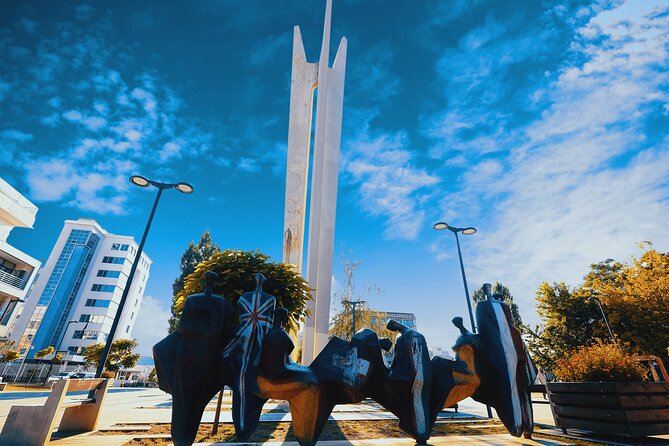
Pristina can feel complex fast, so this walk helps you sort it out. You start at Mother Teresa Cathedral, then move through a tight route where independence symbolism, Ottoman architecture, and everyday market life sit close together. I especially like that the guide keeps the story moving as you go.
I also like the mix of big-name sights and quick context stops. You’ll see the Newborn Monument and the Kosovo’s National Library, then get a museum stop that puts the region into focus without eating your whole day.
One thing to plan for: entrance fees are not included for all stops, so you may pay a small amount on site depending on which places you enter. If you’re trying to keep costs ultra-low, go in expecting those extra euro notes.
In This Review
- Key highlights at a glance
- Private walking tour in Pristina, why this route works
- Where you meet: starting at Mother Teresa Cathedral
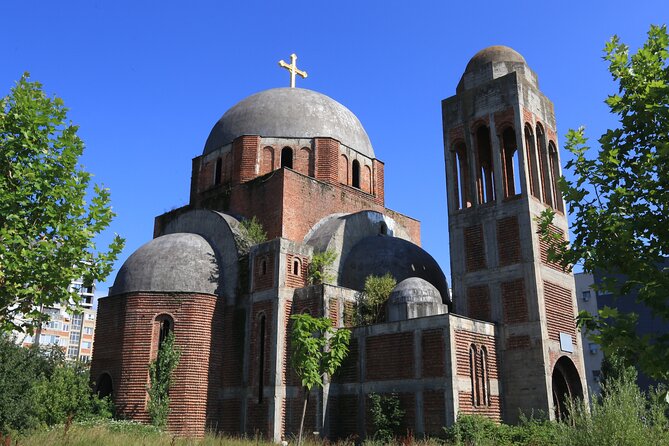
- Mother Teresa Cathedral: a modern church you can’t miss
- National Library of Kosovo, Pjetër Bogdani: the domes you notice first
- The Newborn Monument: the independence symbol you see in real time
- Mother Teresa Square and Mother Teresa Boulevard: where the walk turns social
- Kosovo National Museum stop: fast context with free admission
- Fatih Mosque (Xhamia e Mbretit): Ottoman details on a city street
- Old Green Market: everyday life, not postcard scenery
- Price and value: what $52.48 gets you in real terms
- Planning your visit: opening hours and practical pacing
- Who should book this private walk
- The one downside to factor in
- Should you book this Pristina private walking tour?
- FAQ
- FAQ
- How long is the private walking tour?
- Is the tour private or shared?
- What is included in the price?
- Are entrance fees included?
- What are the start and end points?
- What time can I take the tour?
Key highlights at a glance
- Mother Teresa Cathedral: modern architecture tied to a global humanitarian figure
- Pjetër Bogdani National Library: a standout domed building and a major cultural institution
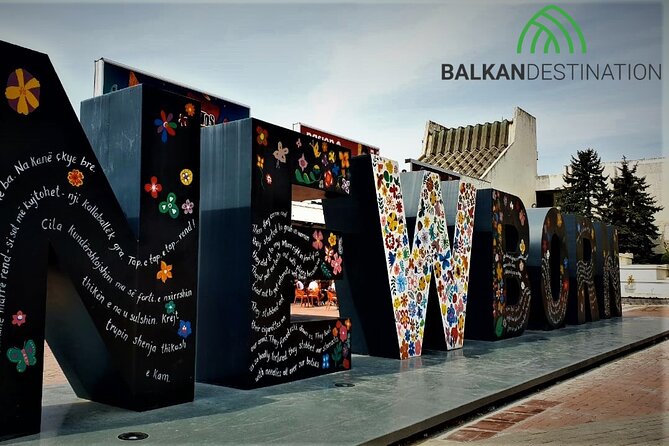
- Newborn Monument: the word NEWBORN repainted each independence anniversary
- Kosovo Museum stop: admission is listed as free, with a good time-to-info ratio
- Fatih Mosque (Xhamia e Mbretit): Ottoman-era details in the city center
- Old Green Market area: a practical taste of local food and street life on foot
Private walking tour in Pristina, why this route works
This is a private, 2-hour walking tour built for orientation. That sounds simple, but in a city like Pristina, speed matters. In a short window, you can go from religion and architecture to independence-era symbols to the daily rhythm of the market, all with a guide steering you.
You’ll be with a professional English guide for about two hours, and the itinerary is described as customizable. That means if you care more about architecture or more about modern symbols, you can usually nudge the pace at the right moments, rather than being stuck with a rigid script.
The tour also uses a mobile ticket, and it’s private, so only your group participates. For couples and small families, that often turns a “sightseeing loop” into something closer to a street-level conversation, with you able to ask follow-ups as you see each place.
More time in Pristina:
- From Skopje: Kosovo in a Day – Prishtina, Monastery & Bears★ 4.8 · 646 reviews
- 1-Day Trip : Prishtina and Prizren from Tirana★ 4.5 · 464 reviews
- From Tirana/Durres/Golem: Prizren & Prishtina Full-Day Tour★ 4.8 · 388 reviews
Where you meet: starting at Mother Teresa Cathedral
The tour starts at the Cathedral of Saint Mother Teresa on Nena Tereze in Prishtina. It’s a clear, central anchor point, and it helps because you build the rest of the walk outward from something most visitors can picture in their head right away.
The end point is also useful: the tour finishes behind the Assembly of Republic of Kosovo area, near the municipality building. In practice, that means you’re dropping near major civic landmarks, which makes it easier to continue on foot for dinner or to pick up public transport without backtracking.
Timing-wise, you’re looking at a 2-hour duration including travel time. In other words, don’t plan a separate stop right after unless you’re okay with a bit of a rush. Build in a calm window afterward for coffee or a slow market browse.
Mother Teresa Cathedral: a modern church you can’t miss
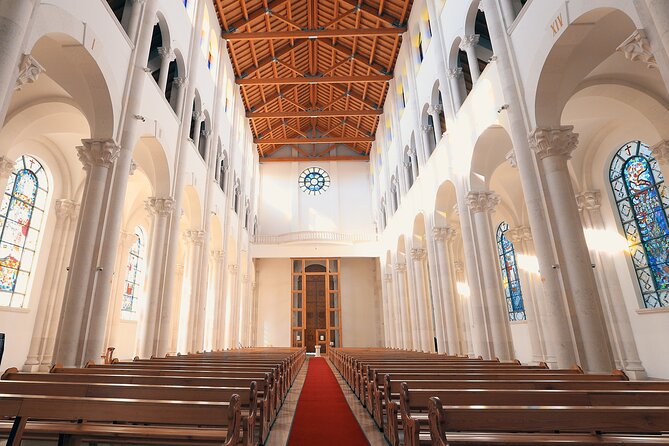
The first major stop is the Cathedral of Saint Mother Teresa. It’s described as a prominent Roman Catholic cathedral in Pristina, dedicated to Mother Teresa, and its architecture is what catches most eyes immediately. The cathedral is modern in feel, with a mix of contemporary and traditional design elements.
In a city where many landmarks relate to different historical layers, the cathedral works as a strong starting point because it connects global identity with local place. You get a physical sense of how Pristina presents itself today, right at the beginning of the walk.
There’s one practical detail to note: admission is not included for this stop. Plan for that if you want to go inside. If you just want photos and exterior details, you can still get plenty from the approach and viewpoint, but the tour is set up so you can decide what to enter based on your interests and budget.
National Library of Kosovo, Pjetër Bogdani: the domes you notice first
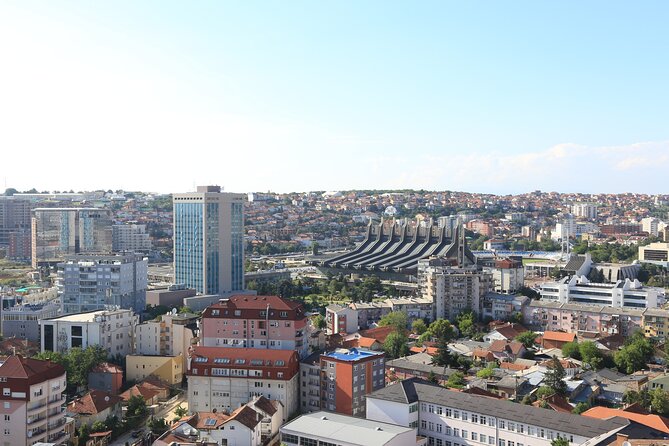
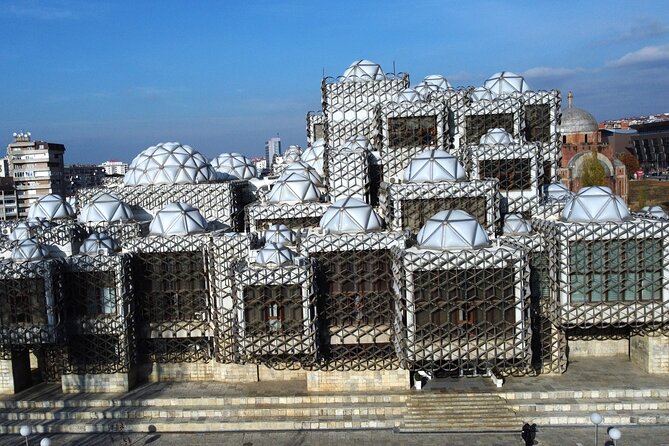
Next comes the National Library of Kosovo, Pjetër Bogdani. This is identified as Kosovo’s highest library institution and is named after Pjetër Bogdani, a notable figure in Albanian literature.
The building itself is a star feature here. It’s described as having an architectural design resembling a chain of domes. That’s the kind of detail you can spot even if you’re not a history buff, and it makes the library feel more like a landmark than a quiet institution tucked away.
This stop is valuable because it shifts your perspective. After a cathedral, a monument, and public squares, a national library reminds you that culture is also infrastructure. It’s a place for collecting, preserving, and promoting literary and cultural heritage. Even if you don’t go inside, the stop gives you a more complete picture of what a capital city invests in.
More of Pristina covered at a walk:
- Prishtina: Guided Walking Tour with a Local
★ 5.0 · 10 reviews - Prishtina: Walking Tour of History, Landmarks & Local Life
★ 5.0 · 4 reviews - The best of Pristina walking tour
★ 5.0 · 3 reviews
The Newborn Monument: the independence symbol you see in real time
Then you hit one of Pristina’s most distinctive modern symbols, the Newborn Monument. This typographic sculpture, unveiled in 2008, is tied directly to Kosovo’s declaration of independence.
The monument consists of the word NEWBORN in capital letters, and it’s often covered in graffiti and messages from locals and tourists. What I like about this stop is that it feels alive, not museum-quiet. The monument is repainted annually on the anniversary of Kosovo’s independence, which means it literally cycles between official form and everyday voices.
That annual repainting matters for understanding the city. It’s a reminder that identity in public space is not static. It’s negotiated, shared, and re-written over time. With a guide, you’ll get the context behind why this particular symbol ended up in the center of people’s attention.
Mother Teresa Square and Mother Teresa Boulevard: where the walk turns social
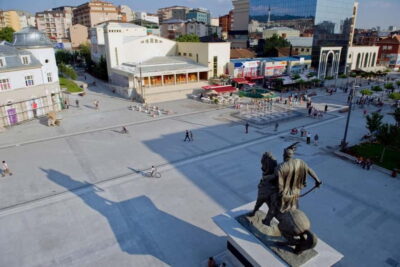
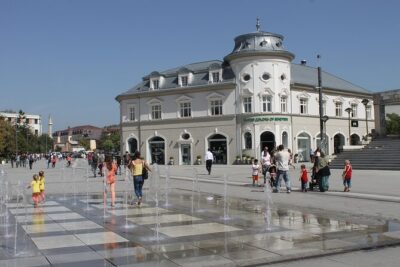
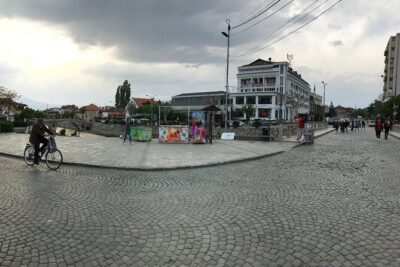
After Newborn, the route moves into the Mother Teresa Square and along Mother Teresa Boulevard. These two stops are practical because they give you an in-between moment: you’re not just looking at monuments, you’re walking through the social spine of the area.
The square is described as spacious and pedestrian-friendly, surrounded by modern buildings, cafes, and shops. Then the boulevard is the main street stretch lined with lots of places to eat and people-watch.
This is where you can slow down and make the tour work for you. If your legs need a breather, this is a good place to grab a coffee, watch street life, and regroup. If you’re traveling with someone who gets tired of “quick stops,” this section often feels more natural and less like a checklist.
Kosovo National Museum stop: fast context with free admission
Midway, you’ll make a stop at the National Gallery of Kosovo, but the description centers on the Kosovo National Museum. The museum is listed as the largest and oldest institution of its kind in Kosovo.
The building is described as Austro-Hungarian style, which is a key clue to the museum’s vibe. You’re not just looking at objects, you’re also in a structure that reflects older European architectural influence. That helps you connect artifacts to the broader regional story.
The museum stop is listed as free admission, and it’s timed around 20 minutes. Twenty minutes sounds short, but for a museum used as a context stop, it can be effective. You get a sweep through prehistoric, Roman-era, medieval, and modern historical items, which helps you understand what you’re seeing elsewhere on the walk.
If you’re the type who hates slow museum wandering, this timing is a plus. If you love museums, you might treat this as a sampler and plan a deeper visit later when you have more time.
Fatih Mosque (Xhamia e Mbretit): Ottoman details on a city street
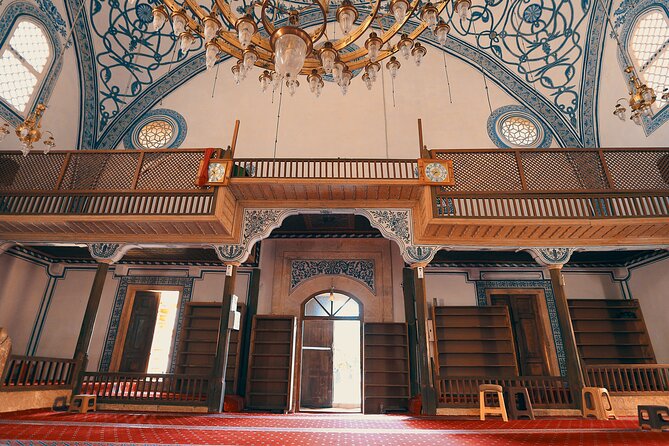
Next up is the Fatih Mosque, also called Xhamia e Mbretit. It’s described as a prominent religious and historical landmark in central Pristina, built in the 15th century during Ottoman rule.
The mosque is named after Sultan Mehmet II, also known as Fatih Sultan Mehmet. Architectural highlights include a large dome, a single minaret, and a spacious courtyard. The interior is described as featuring Islamic calligraphy and intricate designs, which is exactly the kind of detail your guide can point out so you don’t miss it.
Admission is noted as not included, so if entering is part of your plan, set aside that small extra cost. Even if you don’t go inside, the exterior and courtyard area can still help you understand how Pristina’s layers of history sit side by side rather than separated.
This stop also changes the mood of the walk. You’re moving from independence symbolism and civic squares into a spiritual and architectural tradition that’s been part of the city for centuries.
Old Green Market: everyday life, not postcard scenery
The walk also includes the Old Green Market. This is described as a bustling local hub, packed with stalls selling fresh fruits, vegetables, herbs, and other local produce. You’ll smell food, hear the chatter of vendors and customers, and see the color contrast of fresh goods and stall displays.
This is the part of the tour that often feels most “real” because it’s not about a single landmark. It’s about routine. Even if you don’t buy anything, standing near the stalls helps you understand what the city sounds like and what people are prioritizing day to day.
If you’re shopping, keep it simple: bring small cash, be ready to ask questions, and treat it like a food stop. If you’re not shopping, treat it like a quick sensory break and move on while the market energy is still there.
Price and value: what $52.48 gets you in real terms
The price is $52.48 per person, for a private walking tour lasting about 2 hours. It’s also described as including a professional English guide and taxes.
For value, I look at three things:
- you get private time with a guide, not a crowd shuffle
- the route hits multiple “types” of sights, not just churches or monuments
- the stop plan includes at least one place with free admission (the museum), which reduces the surprise costs
Entrance fees are listed as approximately 3 to 5 euro per person, and not every stop includes entry. On top of that, gratuities to the guide are not included. So the real total depends on whether you enter the cathedral and mosque and whether you want to spend time at each indoor or ticketed moment.
Still, for a city like Pristina where getting orientation matters, this format often feels fair. You’re paying for time, explanations, and a route that strings together the right landmarks without dragging.
Planning your visit: opening hours and practical pacing
The tour provider lists opening hours as 9:00 AM to 5:00 PM, Monday through Sunday, for the relevant window shown. That matters because at least some stops depend on whether interiors are available.
Also remember this tour is about 2 hours total, and that time already includes travel between points. If you show up right at the meeting time and start promptly, you’ll feel the tour as a smooth sequence. If you’re late, it can compress the experience in a hurry because there isn’t spare time built in.
A small but important tip: wear comfortable walking shoes. This is a walking tour, and you’ll be moving between cathedral area, central landmarks, and the market zone.
Who should book this private walk
This tour fits best if you want:
- a structured orientation to Pristina without doing research on every stop yourself
- an easy mix of major landmarks plus local street atmosphere
- a private guide who can explain what you’re seeing, in English, without forcing you into a large group pace
I’d also recommend it for first-timers who want a route that touches major points of interest in one morning or afternoon block. If you already know a lot and want long museum time, you might pair this with additional independent visits afterward.
The one downside to factor in
The biggest trade-off is simple: time. With only around 2 hours, your stops are brief, and not all places are included for entry. If you’re the kind of traveler who wants lingering photo time inside every building, you might feel slightly rushed at points.
The fix is straightforward: treat indoor access as optional. Focus on the explanations from your guide, view key architecture up close, and save the slow, deep visits for a separate trip if you still want more.
Should you book this Pristina private walking tour?
I think this is a good booking if you want a guided, well-paced introduction to Pristina’s main symbols and city life in one shot. The route makes sense because it connects Mother Teresa Cathedral, Pjetër Bogdani National Library, the Newborn Monument, museum context, and Ottoman-era architecture, then finishes in an area that feels like daily living.
Book it if you like your sightseeing with context, and you appreciate when a guide helps you read what you see. Pass or adjust expectations if you’re trying to avoid any extra costs, since entrance fees and gratuities are not included for all stops.
FAQ
FAQ
How long is the private walking tour?
The tour lasts about 2 hours, and the duration already includes travel time.
Is the tour private or shared?
It’s a private tour. Only your group will participate.
What is included in the price?
The price includes a professional English guide for 2 hours and taxes. Admission fees and gratuities are not included.
Are entrance fees included?
Entrance fees are not included. They are listed as approximately 3 to 5 euro per person, with some sites noted as free.
What are the start and end points?
The tour starts at Cathedral of Saint Mother Teresa on Nena Tereze in Pristina and ends behind the Parliament of Kosovo near the municipality building.
What time can I take the tour?
The listed opening hours are 9:00 AM to 5:00 PM, Monday through Sunday. Confirmation is received at booking time.
Newest trips written up around Pristina
Walking Tours, compared.
Prishtina Walking Tour to Mother Teresa Cathedral
Read our review →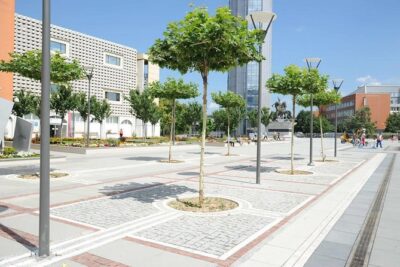
Prizren Walking Tour: Explore the Heritage of Open Museum City
Read our review →Browse the lists this tour appears in