
Reviewed · KOSOVO HIGHLIGHTS TOURS
Discover the Heart of Kosovo in 2 Day Tour
Kosovo hits different in two focused days, with Ottoman Prizren, Pristina’s independence symbols, and UNESCO monasteries. This tour moves you through two UNESCO days worth of art and faith, plus museums and lively bazaars, with pickup and an English-speaking certified guide like Semin.
I love how the plan connects places that explain Kosovo’s layers, from the League of Prizren museum to Prizren’s mosques and churches in one old-town loop. You’ll also get the kind of stop that makes your guide’s storytelling click, like the fresco-filled monastery interiors you see on Day 2.
One consideration: the schedule is packed, and you’ll do a fair amount of walking and short climbs, plus a few sites have small entry fees that are not included.
In This Review
- Key things I’d mark as the best parts
- Two days in Kosovo that feel organized, not rushed
- Day 1 in Prizren: Ottoman baths, tekkes, bridges, and fortress views
- Day 1 in Pristina: independence art, major mosques, and culture stops
- Day 2 in Peja: UNESCO monasteries and a restored bazaar rhythm
- Day 2 in Dečani: why these frescoes are the main event
- Day 2 in Gjakova: Ottoman landmarks and market streets that move at human speed
- Price and value: where your $229.87 really goes
- How to make this tour work for you
- Should you book this 2 Day Tour of the Heart of Kosovo?
- FAQ
- What time does the tour start?
- Is pickup and drop-off included?
- Is the tour offered in English?
- Is this tour private?
- What’s the duration?
- Are meals included?
- Which entry fees should I expect to pay separately?
- Can I cancel for a full refund?
Key things I’d mark as the best parts
- Semin’s guide style: friendly, big-picture context, and helpful pacing across both days
- Prizren’s religious mix in a walkable center: mosques, churches, and tekkes all close enough to connect
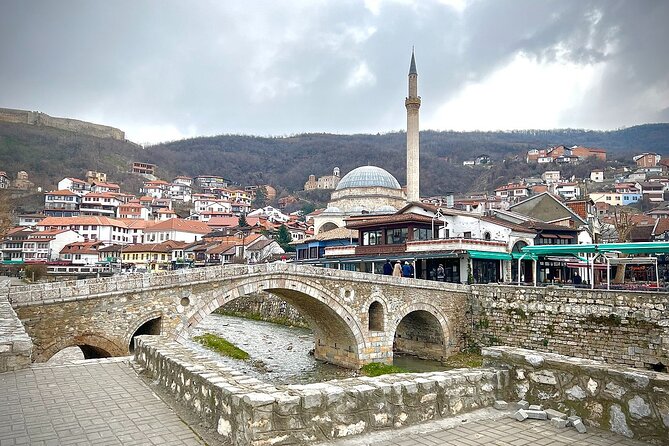
- Stone Bridge and the fortress views: photo stops that also come with historical context
- UNESCO monasteries with standout frescoes: Peć and Dečani are the main art-and-history payoff
- Gjakova’s bazaar area: old market streets plus Ottoman landmarks like the Hadum Mosque
Two days in Kosovo that feel organized, not rushed
Starting at 9:00 am, you’re picked up from the hotel hall. The driver waits with a sign showing the lead traveler’s name, and you ride in an air-conditioned vehicle, which matters when you’re hopping between towns. This is set up as a private tour for your group only, offered in English, and you also get a mobile ticket.
What I like about this format is that it gives you structure without turning the day into a checkbox sprint. The route is built around big “anchor” places, like Prizren Fortress and the UNESCO monastery complexes, then fills the gaps with museums, mosques, and bazaars so you get a sense of how people actually lived, prayed, traded, and celebrated.
If you’re the kind of traveler who hates logistics headaches, this is the good kind of planning. You show up, your guide handles the flow, and you get local context as you move from one era to the next.
More trips that take in the whole country:
- From Skopje: Kosovo in a Day – Prishtina, Monastery & Bears★ 4.8 · 646 reviews
- From Skopje: Full-Day Kosovo Tour to Pristina and Prizren★ 5.0 · 93 reviews
- Kosovo Tour One Day – combined★ 5.0 · 10 reviews
Day 1 in Prizren: Ottoman baths, tekkes, bridges, and fortress views
Day 1 really sings in Prizren, where the old city feels layered rather than separated. You start with the Albanian national awakening at the Albanian League of Prizren Museum (Muzeu Lidhja Shqiptare e Prizrenit). It’s free for general admission time on the plan, but the tour notes a small fee of €1 per person, so bring a bit of cash or small euros just in case. The setting matters here: the museum is in restored 19th-century Ottoman buildings, and you walk through exhibition halls plus the original assembly room tied to events from 1878.
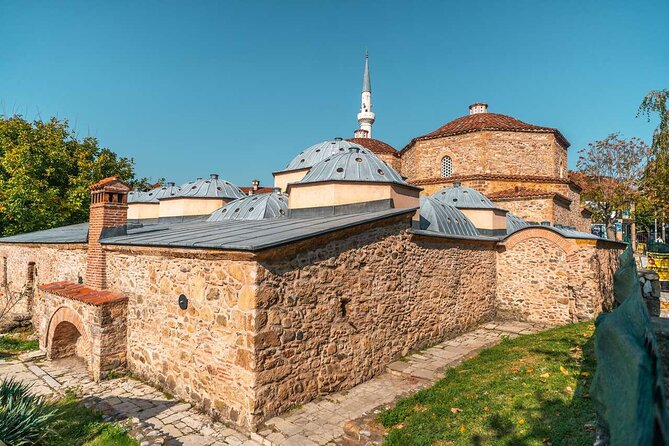
Next you step into one of Kosovo’s most atmospheric Ottoman landmarks, Mehmet Pasha Turkish Bath. This is the kind of place where architecture becomes the story. You’ll see stone domes, marble halls, and the heating rooms, and you’ll learn how the bath’s steam and water systems worked. Even the gender separation is part of the history, with men and women bathing separately under star-shaped skylights. It’s a quick stop, but it’s one of those “wow, this survived” experiences.
From there, you slow down at The Halveti’s Tekke, a 17th-century Sufi dervish lodge. The courtyard and wood-carved interiors set a calm tone right after the bathhouse. If you’re into spiritual architecture, this is a great palate cleanser, and it’s also practical: it’s short, so you don’t lose the day’s momentum.
Then you hit one of Prizren’s simplest joys: the Stone Bridge. It’s a 16th-century Ottoman-era bridge over the Bistrica River, and it gives you instant city context. Your guide connects it to what the bridge has linked over centuries, and you get panoramic views toward Prizren Fortress and Sinan Pasha Mosque, plus the riverside cafés below. This is also one of your best photo windows, and the timing helps.
After the bridge, step into Sinan Pasha Mosque (1615). The main draw is the inside space: a domed ceiling with hand-painted floral motifs and original Quranic calligraphy. This is a “slow look” stop even if you only have about 10 minutes, because details like calligraphy are not things you want to rush.
Now comes the workout part: Kalaja Fortress. The plan gives you about 1 hour here. You’ll climb through ancient stone walls and towers, and you’re rewarded with views over Prizren’s Old Town, its churches and mosques, and the Sharr Mountains in the distance. You’ll also notice how fortress architecture shapes the experience. From up here, it’s easier to understand why cities were built where they were.
To keep the story honest, the itinerary also takes you through Prizren’s religious landmarks in a way that helps you see coexistence, conflict, and change without making it abstract.
You’ll visit Church of Saint George first, an Orthodox community cathedral-style church with Byzantine-inspired architecture and iconostasis paintings. Then comes the Cathedral of Our Lady of Perpetual Succour, Prizren’s main Catholic church, restored after the 1999 war and designed with Neo-Romanesque plus Balkan influences. The stained-glass windows and calmer interior give you a different mood than the Ottoman-era domes.
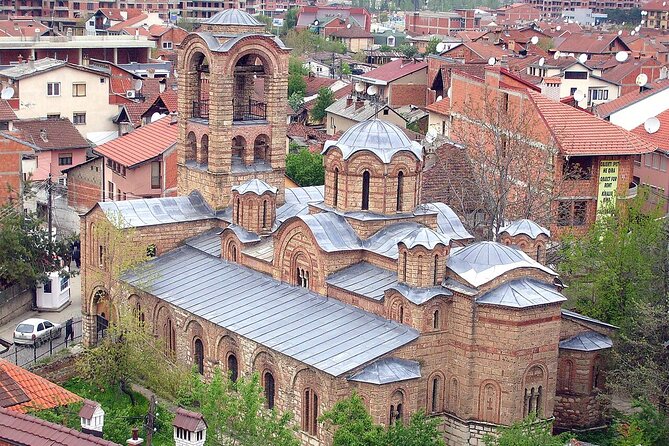
If you want the “layers” stop, you’ll like Our Lady of Ljeviš. This UNESCO World Heritage site began as a 13th-century Serbian Orthodox church, then was transformed during the Ottoman era into a mosque. That layered architecture is exactly what you’re there to see, and the inside is quiet with vivid frescoes. It’s listed as a 20-minute visit, which is perfect for taking in both the shapes and the paintings.
Before leaving Prizren’s center, you’ll end with Archaeological Museum housed in a restored 15th-century Ottoman building, the Ahmet Bey Bath. It’s not just a room of objects. You’ll see artifacts from prehistoric, Illyrian, Roman, Byzantine, and Ottoman periods, all unearthed locally. The fun part is how the collection supports the bigger point of the whole day: Kosovo’s story is long, and different eras don’t erase each other.
Day 1 in Pristina: independence art, major mosques, and culture stops
After Prizren, Day 1 shifts to Pristina for monuments and museums tied to identity and education.
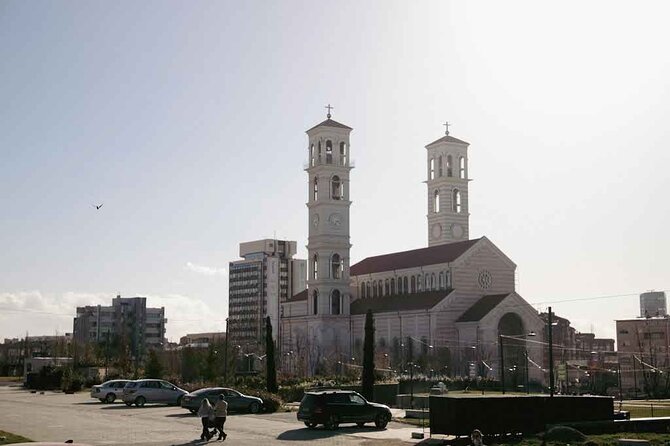
The first big architectural statement is the Cathedral of Saint Mother Teresa. Completed in 2017, dedicated to Mother Teresa and tied to her Albanian heritage, it mixes modern design with classical elegance. You can climb the bell tower for panoramic views, and the stained glass showing scenes from Mother Teresa’s life helps make the cathedral feel more like a story than a building. It’s one of the easier “why Kosovo matters now” stops.
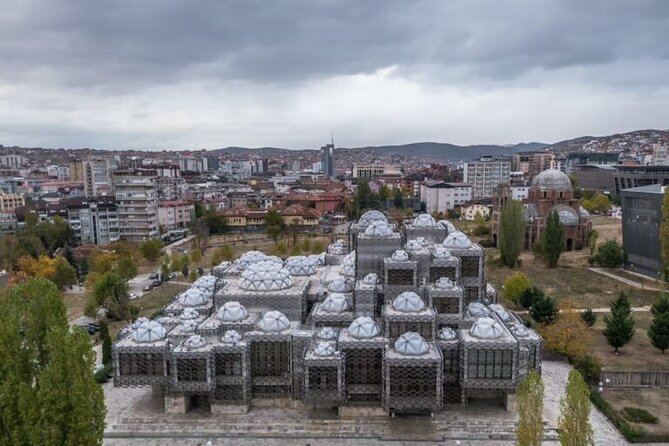
Next up is the National University Library of Kosovo, Pjetër Bogdani. This is one of those buildings that looks symbolic even before you learn the details. You’ll spot 99 white domes and a metal lattice facade, designed to represent tradition meeting modernity. Inside, the focus shifts to preservation and education, with rare manuscripts and national archives tied to Albanian literary works.
Then the tour leans hard into independence symbolism with two short, powerful stops.
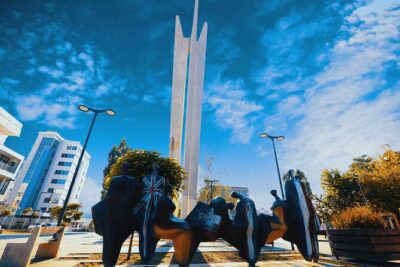
The Newborn Monument was unveiled on February 17, 2008. The sculpture literally spells NEWBORN and gets repainted each year, so it never looks exactly the same twice. Nearby is the Heroinat Memorial, dedicated to women impacted during the Kosovo War. It features 20,000 small pins that form a woman’s face, each pin representing a survivor and her story. Even though these stops are brief, they leave an imprint because they connect national change to individual lives.
At Skanderbeg Square, you’ll find the equestrian Skanderbeg statue surrounded by government buildings, cafés, and cultural landmarks. It’s a good place to orient yourself in Pristina’s civic center before you move into the older sacred spaces.
On the religious side, Day 1 includes two Ottoman-era mosque visits.
First is the Sultan Murad Cami (Imperial Mosque), built in 1461 under Sultan Mehmed II. Then you’ll visit the Great Mosque (Xhamia e Madhe, Ibrahim Lutfiu Mosque), originally built in the 15th century and later renovated. Expect ornate interior calligraphy, a graceful dome, and a slender minaret. Together they give you a practical sense of how Ottoman architecture shaped worship spaces.
Now switch back to museums and everyday culture.
The Kosovo Museum is the country’s oldest cultural institution, founded in 1949 in an Austro-Hungarian-era building from 1889. Highlights include the Goddess on the Throne figurine, ancient jewelry, medieval arms, and ethnographic displays. If you like museums but hate spending hours trapped indoors, this one is paced well for a 20-minute stop.
For a more personal feel, the Ethnographic Museum (Muzeu Etnologjik) sits in an 18th-century Ottoman house. It focuses on traditional Albanian life, clothing, tools, and crafts. This is where you get the “how people lived” layer, not just the “what happened” timeline.
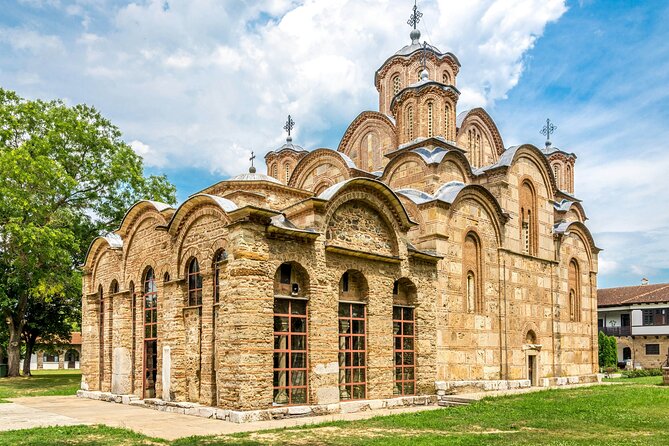
Finally, you’ll visit Gracanica Monastery, a UNESCO site and one of the finest examples of Serbo-Byzantine architecture in the Balkans. The monastery is built by King Stefan Milutin in 1321 and features five domes and some of the best-preserved 14th-century frescoes showing scenes from the New Testament. The plan notes an entry fee of €5 per person, so plan for that.
Day 2 in Peja: UNESCO monasteries and a restored bazaar rhythm
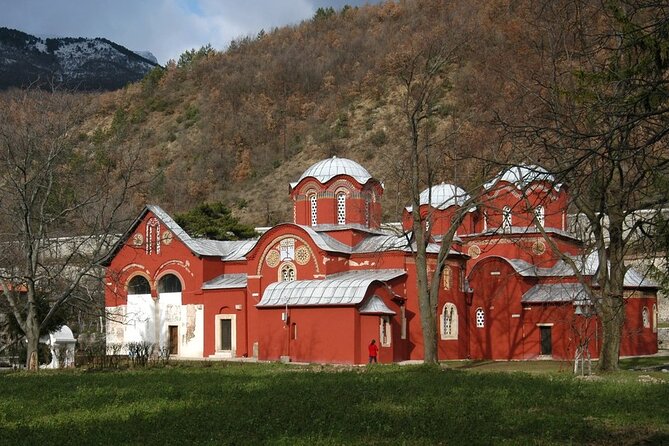
Day 2 starts with the Patriarchate of Peć, a UNESCO World Heritage Site and the Serbian Orthodox Church’s spiritual seat since the 13th century. It sits at the foot of Rugova Gorge. The complex is walled and made of four interconnected churches with red façades and medieval frescoes. It’s listed as a 20-minute visit, but the quality comes from seeing the churches as a connected group, not as isolated stops.
This is one of the days where the paid entry makes sense: the tour notes a €5 per person fee for the Patriarchate. If you’re budgeting, this is a place where you’re paying for the right thing, the preservation and access that lets you actually experience the frescoed interiors.
After Peć, you move to the Old Bazaar of Peja (Çarshia e Pejës). The focus here is daily life and commerce. The bazaar has cobbled streets with craft shops, goldsmiths, tailors, and spice vendors. The route matters: you walk through rebuilt areas after the 1999 war, and you still get a sense of the traditional layout.
Nearby is the Museum of Peja (Muzeu i Pejës), which covers archaeology, ethnography, and history. It’s housed in an early 20th-century building near the bazaar. Expect items ranging from prehistoric tools and Illyrian pottery to Ottoman household pieces and traditional costumes. It’s a good pairing with the bazaar since it explains what you’re seeing outside.
More Pristina trips worth staying over for:
- Skopje and Ohrid two day tour from Pristina
★ 5.0 · 1 review
Day 2 in Dečani: why these frescoes are the main event
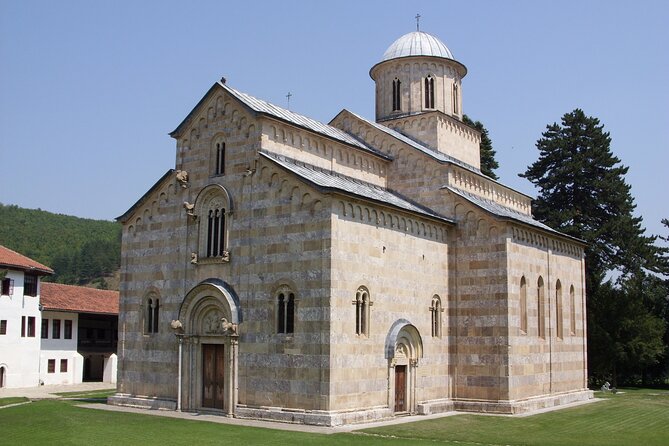
The second UNESCO anchor on Day 2 is Visoki Decani Monastery. The itinerary describes it as one of the best-preserved medieval monasteries in the Balkans, built between 1327 and 1335 under King Stefan Dečanski. It mixes Romanesque and Byzantine styles, and it sits in mountain scenery, so the approach also builds anticipation.
Inside is the real reason you come: over 1,000 vivid frescoes depicting scenes from the Bible. If you’re serious about Christian art, this is the kind of stop that gives you a sense of how medieval painters built meaning through color and composition. The visit is about 20 minutes, which is enough time to notice details without feeling trapped.
The tour lists an entry fee of €5 per person for Dečani as well. Again, it’s worth factoring into your budget because UNESCO access costs money, and this is the one where the art payoff justifies it.
Day 2 in Gjakova: Ottoman landmarks and market streets that move at human speed
After the monasteries, the route turns into something more street-level in Gjakova.
You begin with the Hadum Mosque (Xhamia e Hadumit), built in 1594 by Mullah Hadum Aga. Expect an elegant dome, a slender minaret, and a richly painted interior filled with floral and geometric motifs. It’s a shorter stop, but it gives you that Ottoman design language again after the monastery frescoes, so you get both “sacred art styles” in one day.
Then walk Çarshia e Madhe (the Grand Bazaar of Gjakova). The bazaar dates to the 16th century and once had hundreds of shops across textiles, silver, leather, and crafts. After damage in 1999, it was rebuilt, and you can still see stone-paved streets and traditional wooden facades. If you like browsing, this is one of the better parts of the itinerary because it feels like a place that still works.
A short museum stop follows: the Ethnographic museum of Gjakova in an 18th-century Albanian home that belonged to a wealthy merchant family. You’ll see furniture, clothing, tools, and household items that cover everyday life in Ottoman and early modern periods. This is useful when you want context for what you noticed in the bazaar.
Next is the Teqja e Madhe, the Grand Tekke, a major Sufi spiritual center founded in the 16th century. It belongs to the Halveti order of dervishes and continues to host spiritual gatherings and rituals today. It’s another short stop, but it keeps the spiritual thread running through the whole tour: bathhouse, tekke, mosques, and monasteries.
To end the historic center visit, you’ll see the Sahat Kulla (Clock Tower). It was originally built in the 16th century and reconstructed in 2000 after wartime destruction. The tower is near the old bazaar, making it a natural photo stop and a solid finish to the Ottoman-era urban feel of the day. It’s listed as 5 minutes, but it’s the kind of landmark you’ll remember.
Price and value: where your $229.87 really goes
The tour price is $229.87 per person for about 2 days, and it includes a lot of “you don’t have to manage this yourself” value: certified tour guide, pickup and drop-off at your designated location, and an air-conditioned vehicle.
Also, the entry mix is gentle. Most stops are listed with free admission on the plan. The key exception is that a few UNESCO and major sites have entry fees not included in the price:
- Albanian League of Prizren museum: €1 per person
- Gračanica Monastery: €5 per person
- Patriarchate of Peja: €5 per person
- Visoki Dečani Monastery: €5 per person
So you should budget a small amount of cash or euros on top, but you’re not paying for every single stop. For many travelers, that makes the tour feel fair because you’re mostly paying for guide time, transport, and access to the right UNESCO sites rather than nickel-and-diming every location.
If you’re comparing alternatives, the biggest cost saver here is that you avoid piecing together inter-city transport and trying to time visits across multiple towns. Even if you enjoy DIY travel, Kosovo’s heritage sites are not the kind where you want to guess your way through.
How to make this tour work for you
This tour suits people who like history that you can actually see: architecture, art, religious buildings, and the street-level market life around them. It also works well if you want a guided overview first, then return later to spend more time in the places that hooked you most.
Because the schedule includes fort walking and UNESCO interiors, I’d plan for:
- Comfortable shoes for uneven old-city streets and climbs at the fortress
- A light daypack (water and a layer can be handy, even if you’re not told what weather will be)
- A mindset of switching styles fast, since you go from Ottoman bathhouses to frescoed monasteries and then back to bazaars
And about the guide, the best practical tip is to use their context. Places like Our Lady of Ljeviš are easy to understand faster when your guide explains the layered church-to-mosque story before you look up at the architecture.
Should you book this 2 Day Tour of the Heart of Kosovo?
If you want a 2-day plan that shows Kosovo’s identity through three angles (Prizren’s historic layers, Pristina’s independence symbols and museums, and Day 2’s UNESCO art in Peć and Dečani), this is a strong choice. It also gets high marks for the guide experience, and Semin is repeatedly highlighted for being friendly and for sharing real insight rather than just dates.
Skip it only if you hate tight schedules, long days, or you prefer to linger at one place for hours. This tour is built to connect many meaningful stops, not to slow down into one neighborhood.
If you’re on the fence, I’d decide based on your priorities:
- Want a guided “greatest hits” framework with UNESCO time? Book.
- Want a slow, single-city trip? Choose a different style of travel.
FAQ
What time does the tour start?
The tour start time is 9:00 am.
Is pickup and drop-off included?
Yes. You’ll be picked up at the hotel hall and dropped off at a designated location.
Is the tour offered in English?
Yes, the tour is offered in English.
Is this tour private?
Yes. It’s listed as a private tour/activity, so only your group participates.
What’s the duration?
It’s listed as 2 days (approx.).
Are meals included?
No. Meals are not included.
Which entry fees should I expect to pay separately?
The plan lists these entry tickets as not included in the price: Albanian League of Prizren (€1 per person), Gračanica Monastery (€5 per person), Patriarchate of Peja (€5 per person), and Dečani Monastery (€5 per person). Other stops are shown as free on the plan.
Can I cancel for a full refund?
Yes. You can cancel up to 24 hours in advance for a full refund. Cancellation changes are based on the tour’s local time.
Newest trips written up around Pristina
Kosovo Highlights Tours, compared.
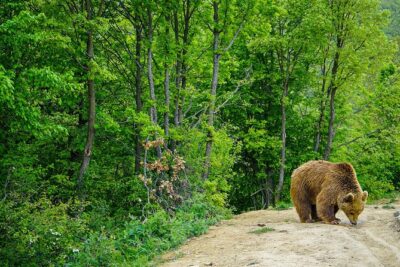
From Skopje: Kosovo in a Day – Prishtina, Monastery & Bears
Read our review →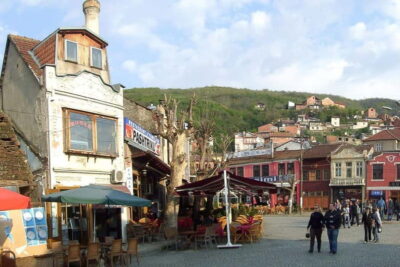
From Skopje: Full-Day Kosovo Tour to Pristina and Prizren
Read our review →
Browse the lists this tour appears in